Priming in Pumps: A Philippine Buyer's Guide to Self-Priming Pumps
Daftar Isiexpand_more
Priming in Pumps: What It Is & How to Choose the Right Self-Priming Pump in the Philippines
Priming in pumps refers to removing air from the suction line and pump casing and replacing it with the liquid being pumped. Standard centrifugal pumps cannot evacuate air and will run dry—causing seal failure and impeller damage. Self-priming pumps solve this by automatically expelling air during startup, making them one of the most reliable choices for applications where the water source is below the pump. At 3G Electric, we help Philippine facilities source the right self-priming pumps from trusted OEMs like Dayton and GOULDS WATER TECHNOLOGY, backed by over 35 years of industrial supply experience across machining, electrical, pumps, and controls.
How Priming Works: The Technology Behind Self-Priming Pumps
A self-priming centrifugal pump contains a reservoir of liquid that remains in the casing after initial priming. On startup, the impeller creates a vortex that mixes air from the suction line with the recirculating liquid. This air-liquid mixture is discharged into a separation chamber, where air escapes and the liquid falls back into the casing. This cycle repeats until all air is purged and the pump reaches full suction lift. Key components include the casing volute, impeller, separator chamber, and a check valve or foot valve that prevents liquid from draining back into the sump. In the Philippines, where water sources often sit below ground level in irrigation canals or deep reservoirs, this mechanism is essential.
Self-Priming Pump Specification Table
| Specification | Typical Range | Example Values |
|---|---|---|
| Motor Power | 1/8 HP to 3 HP | 0.75 kW to 2.2 kW |
| Voltage | 115/230V AC or 208-230/460V AC | 230V AC single-phase, 460V AC three-phase |
| Max Head | 33 ft to 115.5 ft | 10 m to 35 m |
| Suction Lift | Up to 25 ft | 7.6 m |
| Intake / Discharge Connection | 1 in to 2-1/2 in | DN25 to DN65 |
| Max Flow (Typical 1 HP model) | Up to 50 GPM | 11 m³/hr |
| Motor Enclosure | ODP or TEFC | Open Drip-Proof, Totally Enclosed Fan Cooled |
Types of Self-Priming Pumps & Philippine Applications
Self-priming pumps come in several configurations, each suited to different industrial environments in the Philippines:
- End-suction self-priming centrifugal pumps – Best for water transfer, circulation, and dewatering in manufacturing plants, especially in Metro Manila and industrial parks like Laguna Technopark and Clark Freeport.
- Self-priming sprinkler pumps – Designed for irrigation systems on golf courses, farms, and landscaping projects across Luzon, Visayas, and Mindanao. They deliver consistent pressure, such as 51 psi shut-off pressure, for sprinkler zones.
- Heavy-duty self-priming pumps with TEFC motors – Ideal for outdoor or dusty environments like mining, quarrying, and agricultural processing where a totally enclosed motor protects against debris and weather.
How to Select the Right Pump: 6 Selection Criteria
- Define your suction lift. Measure the vertical distance from the water source to the pump centerline. Self-priming pumps handle up to 25 ft (7.6 m); exceeding this requires a different pump design.
- Check flow rate and head requirements. Convert your needed flow from m³/hr to GPM and your discharge pressure to feet of head. Models like the GOULDS 30SPH90 deliver up to 115.5 ft of head, suitable for high-lift irrigation.
- Select motor power and enclosure. A 1/8 to 1 HP pump is sufficient for small dewatering or fountain circulation; a 1-1/2 to 3 HP unit handles larger irrigation or industrial processes. Use TEFC enclosures for dusty outdoor sites.
- Verify electrical compatibility. Philippine industrial facilities commonly use 230V AC single-phase or 460V AC three-phase. Confirm your pump's voltage and phase before ordering.
- Match connection sizes. Suction and discharge sizes vary from 1-inch (DN25) to 2-1/2 inches (DN65). Match or exceed your existing piping to minimize friction losses.
- Consider liquid characteristics. These pumps are for water and non-corrosive thin liquids. If you pump chemicals or high-viscosity fluids, consult 3G Electric for a different pump family.
According to GOULDS WATER TECHNOLOGY, Self-Priming Pump Installation & Service Manual, 2021: "Before initial startup, the pump casing must be filled with water to the suction port. Once the pump is filled, it will self-prime automatically on subsequent starts."
Product Comparison: Popular Self-Priming Pumps from 3G Electric
| Model | Motor Power | Voltage | Max Head | Connection Size | Enclosure |
|---|---|---|---|---|---|
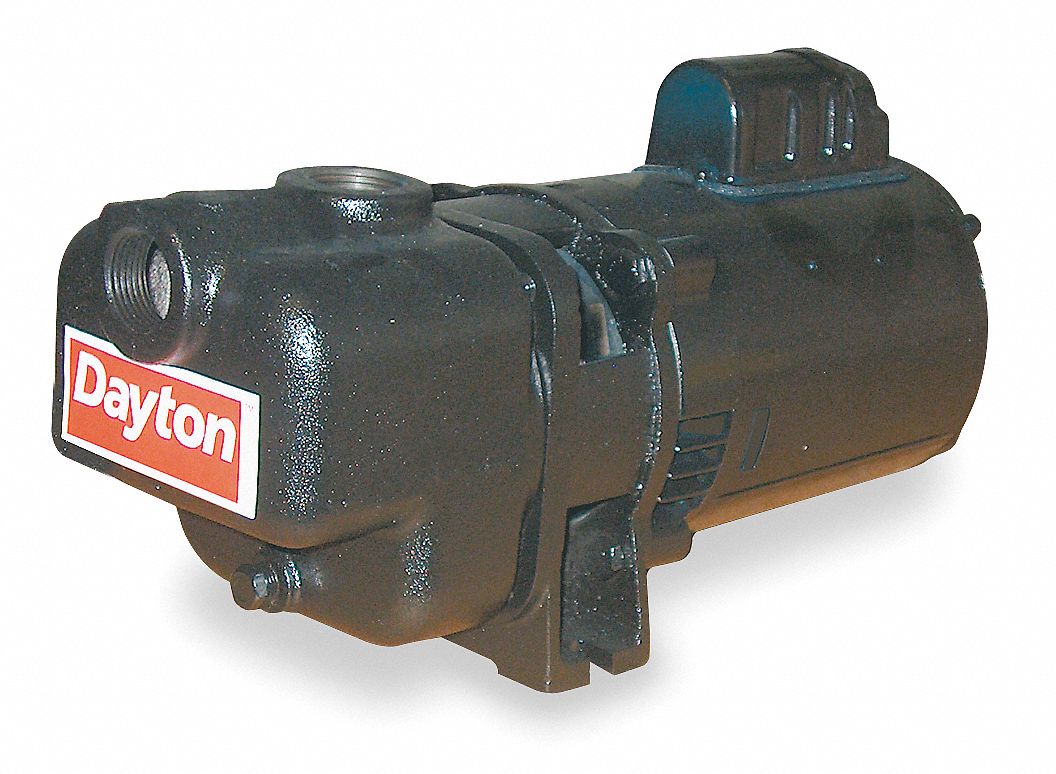
| Dayton 4UA77 Self-Priming Centrifugal Pump | 1-1/2 to 3 HP | 208-230/460V AC | 72 ft | 2 in | ODP |
| GOULDS 30SPH90 Self-Priming Centrifugal Pump | 1-1/2 to 3 HP | 208-230/460V AC | 115.5 ft | 2 in | TEFC |
| GOULDS GT103 Self-Priming Sprinkler Pump | 1 HP | 208-230/460V AC (3-phase) | 118 ft (51 psi shut-off) | 1-1/4 in | ODP |
| Dayton 4UA64 Self-Priming Centrifugal Pump | 1/8 to 1 HP | 208-230/460V AC | 82 ft | 1-1/2 in | ODP |
| Dayton 4UA63 Self-Priming Centrifugal Pump | 1/8 to 1 HP | 115/230V AC | 41 ft | 1 in | ODP |
Each of these pumps is stocked by 3G Electric, and we can help you confirm exact specifications, spare parts, and accessories.
Why Source Your Pumps from 3G Electric?
3G Electric is a Philippine-based industrial solutions provider with over 35 years of experience supplying genuine equipment and parts across 14 industrial departments, including pumps, controls, and combustion. We stock 84+ products in related pump categories and provide technical support to help you interpret specifications, source the right model, and troubleshoot issues. From Luzon to Mindanao, our team coordinates delivery and offers after-sales assistance so your operation keeps flowing.
Priming in Pumps: Frequently Asked Questions
What is priming in pumps?
Priming is filling the pump casing and suction line with liquid to remove air before starting. Without priming, a standard centrifugal pump cannot generate suction and will run dry, causing seal and impeller damage.
Do self-priming pumps need priming every time?
No. After the initial prime, the pump casing retains enough liquid to self-prime automatically when air enters the suction line. However, if the pump is drained for maintenance or sits idle for a long time, it may need re-priming.
Where can I buy self-priming pumps in the Philippines?
3G Electric supplies Dayton and GOULDS WATER TECHNOLOGY self-priming pumps in the Philippines. We offer competitive quotes, fast delivery to provincial areas, and technical assistance for selection and installation.
How high can a self-priming centrifugal pump lift?
Most self-priming centrifugal pumps can lift water up to 25 feet (7.6 meters) vertically from the water source to the pump. Suction lift decreases at higher altitudes and with longer suction pipe runs.
What is the difference between a self-priming pump and a normal centrifugal pump?
A normal centrifugal pump must be flooded or manually primed before every start. A self-priming pump contains a built-in reservoir and separator that automatically removes air from the suction line, allowing it to start and re-prime even when the liquid source is below the pump.
Can I use a self-priming pump for saltwater?
Standard self-priming pumps with cast iron or bronze construction are for water and non-corrosive liquids. For saltwater or brackish water in the Philippines, you need a corrosion-resistant model or a specialty pump. Contact 3G Electric for alternatives.
Key Takeaways
- Priming in pumps prevents dry running, which is the most common cause of premature pump failure.
- Self-priming centrifugal pumps with 1/8 HP to 3 HP motors cover most Philippine industrial and agricultural needs, from 33 ft to 115.5 ft of head.
- Choose ODP enclosures for clean indoor use and TEFC enclosures for dusty outdoor environments.
- Always verify voltage (115/230V AC or 208-230/460V AC) and connection sizes (1 in to 2-1/2 in) before purchasing.
- 3G Electric provides genuine Dayton and GOULDS WATER TECHNOLOGY pumps with local technical support and nationwide delivery.
Ready to select the right self-priming pump for your facility? Contact 3G Electric today for a quote, sizing assistance, or technical advice. Our specialists are ready to help you interpret your requirements and deliver the right pump to your site in the Philippines.